“I will return to you. As I have always done. Each of you new and unique, yet somehow the same. Somehow, . . . we are me. Each time, it’s harder. But you will know me, as you have always done. Don’t forget me. I will return to you.”
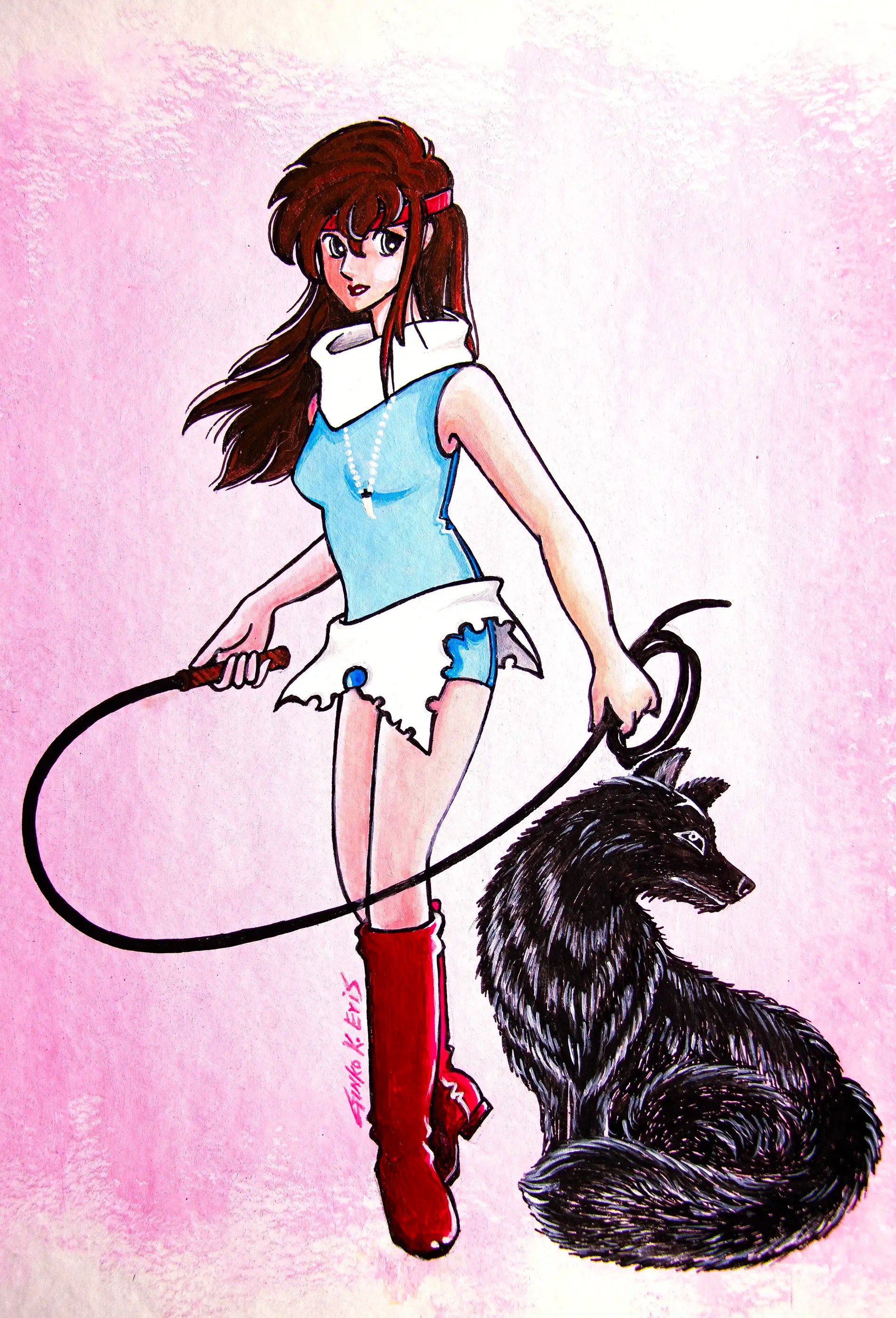
Kokurō. She knew her name was unusual. Where did that come from? Her mother had never been fully clear and avoided responding to her questions about it, though they were asked infrequently. You might expect she’d teased at school, but instead, she was avoided, mostly. All her school life she’d preferred keeping to herself. Perhaps she was not avoided as much as this was just a natural unfolding of things. So many parts of her life seemed to Kokurō to simply unfold – tenkai.
Her grade twelve friends were accreted more than sought—fushigi no katamari—a lax tethering of individuals bound by strangeness more than anything else. She was grateful to not be constantly needed by any of them.
She sensed, growing; an escalation. Day by day, something like tenkai. She knew it was leading somewhere, though would admit it to herself. She began spending even more time alone. In her solitude, Kokurō liked the school’s roof. Ugly concrete, 1960s desolation, with pleasant views across Fushimi. Alone, she would stand at the steel rail with its flaking red paint, looking out, and experiencing the note. The note—this is what it seemed to her. A pedalpoint, or 保続音, would ring out, a term she recalled from music classes with an old Australian composer, トム先生 (Tomu-sensei), as the harmonies of clouds and nostalgia shifted around a central tonality of the internal thrumming. Internal though it was, she thought it a real note, almost audible. She found the note to be beautiful in its power; knew it meant something; and now in the final year of her school life, if she were to cease pushing the thoughts away, she might come to know what it meant and why she sensed a quickening. Earlier today, Kokurō had stood at the red rail, and noticed the note especially strongly. Rapidly, habitually, before permitting herself any reflection, she pushed aside the thought.
Tomu-sensei was fushigi too, haha. Just one isolated, quiet, shaggy, semi-retired strand in her network of 変人たち. Yuzuki was also in the network. Yuzuki, whose name was unusual too, never questioned Kokurō’s name. Yuzuki was self-possessed; maybe due to her kendo training. Years ago, when Kokurō had visited that shady machiya-style building, 水の江剣道会 (Mizunoe Kendo Club), the note had come, as strong as ever. In the dōjō, the harmonies were Yuzuki’s movements, again, moving in angular relation to the 保続音. There was harmonic rhythm too, sensed as Yuzuki’s feet transposed between sudden blurred motion and poise, on the polished hinoki boards. Kokurō, with the awkwardness of a latecomer to a traditional discipline, had joined three years ago, following the harmonic threads. Although they were both twelfth-grade at Fushimi Minami High School, Yuzuki and Kokurō spoke only at the club. Yuzuki was maths and physics, where Kokurō was biology, music and drawing. Yuzuki had a circle of sober, stern colleagues which was closed to Kokurō. Still, in the dōjō, Yuzuki with her percussive motions interspersed with brief fermatas, meant the note arose reliably, and that Kokurō would visit Mizunoe Kendo Club like a repeated phrase: tenkai.
This is where she is headed now. On the eastern outskirts of Fushimi Ward, approaching the ancient, dense Daigo no mori with its small pine cones, the note begins to thrum, only softly, from niente. It is the forest, but also perhaps the building, which causes vibrations that she can feel in the tips of her fingers. This afternoon, a cool autumn breeze passes to her from the wooded area beyond the club. The breeze is. . . somehow different today. . . an astringent cedar and drying leaves. . . but ozone too?
In the club’s genkan, Kokurō slips out of her shoes and lines them neatly beside the others. The scent of bamboo shinai and well-worn tatami calms her, even as she prepares for action and exercise.
Yuzuki is already in the entry alcove, efficiently tightening her hakama.
Kokurō bows lightly.
“Yuzuki-senpai, otsukare.”
Yuzuki looks up, returning the nod with her usual calm.
“Kokurō. You’re early.”
Kokurō clutches her folded keikogi against her chest, another small bow.
“Yes, senpai. I’m looking after the first-years today.”
A slight smile is at the corner of Yuzuki’s mouth.
“It is nice to see you in this role, where not long ago I was coaching you. Let’s do ji geiko together later.”
Kokurō nods, stepping toward the changing room. This is a routine she has now performed hundreds of times, since joining two years ago. For all that she still encounters the thrumming note, undulled even now, she enjoys and yields to the routine.
「私はあなたのもとへ帰る。これまでも、いつもそうしてきた。
ひとりひとりが新しく、唯一でありながら、なぜか同じでもある。
なぜだろう……私たちは、私なのだ。
戻るたびに苦しくなる。それでも、あなたは私を分かるだろう。これまでもそうだったように。
忘れないで。
私はまた、あなたのもとへ帰る。」
黒狼(コクロウ)。
自分の名前が珍しいことは知っていた。
その名の由来が何なのか、母ははっきり教えてくれなかった。たまに尋ねても、いつも曖昧にはぐらかされるだけだった。
変わった名前だから学校でからかわれたのではないかと思われるかもしれない。しかし実際には少し違う。どちらかといえば、周囲から距離を置かれていた。
もっとも、それが本当に周囲のせいだったのかどうか、コクロウには分からない。
彼女自身、昔から一人でいることを好んできた。
もしかすると誰かに避けられていたのではなく、ただ自然な成り行きだったのかもしれない。
人生には、ただ展開していくものがある。
――展開(てんかい)。
コクロウはその言葉が好きだった。
高校三年生になった今の友人たちも、自ら求めて作ったというより、いつの間にか集積してできた存在だった。
不思議の塊。
変わり者同士が、なんとなく緩やかに結びついているだけの集まり。
そんな彼らの誰からも過度に必要とされないことを、コクロウは密かにありがたく思っていた。
だが最近、何かが変わりつつある。
日ごとに。
少しずつ。
まるで別の展開が始まる前触れのように。
その感覚がどこかへ向かっていることは分かっていた。
けれど、それを認めるのは怖かった。
だから彼女はさらに一人の時間を増やした。
一人になりたい時、コクロウにはお気に入りの場所があった。
学校の屋上である。
一九六〇年代の無骨なコンクリート建築。
決して美しい場所ではない。
それでも伏見の町を見渡せる眺めは好きだった。
赤い塗装が剥げかけた手すりにもたれながら、彼女は遠くを眺める。
そして、あの「音」を感じる。
――保続音(ペダルポイント)。
彼女にはそう思えた。
保続音。
昔、音楽の授業でオーストラリア人の老作曲家、トム先生から教わった言葉だった。
雲の形が変わり、郷愁が色を変え、世界の和声が移ろっていく中で。
ただ一つだけ、変わらず鳴り続ける音。
その低い響きが、自分の内側で脈打っている。
実際に耳で聞こえるわけではない。
それでも本当に存在する音のように思えた。
美しい音だった。
力強く、意味深く。
そして今。
高校生活最後の年になって。
もし目を背けるのをやめたなら。
その音の意味が分かってしまう気がした。
今日も昼休み、屋上の赤い手すりの前で、その音はひときわ強く鳴っていた。
だがコクロウは、いつものように考えることをやめた。
反射的に。
習慣のように。
トム先生もまた、不思議な人だった。
静かで。
少しぼさぼさで。
半ば引退したような雰囲気をまとっている。
彼もまた、コクロウの周囲にいる変人たちの一人だった。
そして、その輪の中にはユズキもいる。
ユズキも少し変わった名前を持っていた。
だが彼女は一度もコクロウの名前について尋ねたことがない。
ユズキはいつも落ち着いていた。
それは剣道のおかげかもしれない。
数年前。
コクロウが初めて水の江剣道会を訪れた日のこと。
町家風の古い建物に足を踏み入れた瞬間、あの音が鳴った。
いつにも増して鮮明に。
道場の中で音を彩る和声はユズキの動きだった。
鋭く。
角度を変え。
保続音の周囲を巡る旋律のように。
磨き上げられた檜の床を踏む足さばきには、和声進行すら感じられた。
静止と疾走。
その切り替わりがあまりにも鮮やかだった。
伝統的な武道の世界では遅れてきた新参者だったが、コクロウはその音に導かれるように三年前、この道場へ入門した。
同じ高校、同じ学年でありながら、
二人が会話するのは道場の中だけだった。
ユズキは数学と物理。
コクロウは生物、音楽、美術。
ユズキには固い結びつきのある友人たちがいたが、
コクロウはその輪の外にいた。
それでも――
道場では、ユズキの動きが音を生む。
その音を求めて、
コクロウは何度もそこへ通った。
――展開。
今、その道場へ向かう道の途中。
伏見区東部の外れ。
古く深い醍醐の森が近づいてくる。
小さな松ぼっくりが落ちる森。
その森の気配を感じるたびに、保続音が静かに鳴り始める。
ニエンテから立ち上がるように。
森のせいなのか。
それとも道場の建物そのものなのか。
指先にまで微細な振動が伝わってくる気がした。
秋の涼しい風が森の方から吹いてくる。
今日は少し違う。
杉の香り。
乾いた落葉。
そして。
微かなオゾンの匂い
玄関で靴を脱ぎ、他の部員たちの靴と並べる。
竹刀の竹の香り。
使い込まれた畳の匂い。
それだけで心が落ち着いた。
その時、既にユズキが袴の紐を締めていた。
コクロウは軽く礼をする。
「ユズキ先輩、おつかれさまです」
ユズキは顔を上げ、静かにうなずく。
「コクロウ。早いね」
「はい、先輩。今日は一年生の指導を担当するので」
ユズキの口元にかすかな笑みが浮かぶ。
「少し前まで私があなたを教えていたのにね。あとで地稽古をしよう」
「はい」
コクロウは更衣室へ向かった。
もう数え切れないほど繰り返してきた日常。
それでも、この場所へ来るたびにあの保続音は鳴る。
そして彼女はそれを受け入れていた。
第一章後半へと続く。

