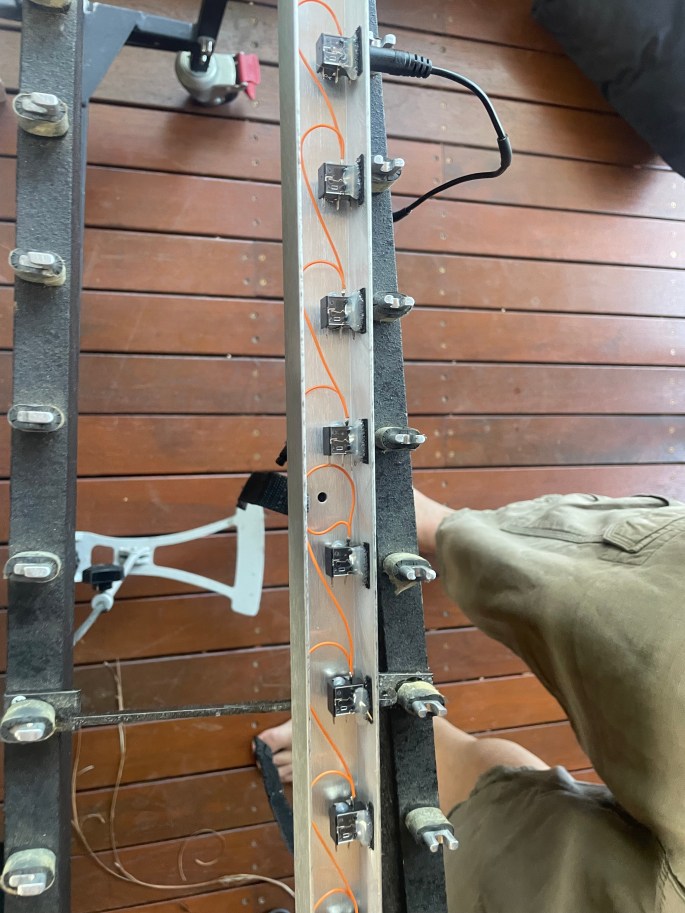
In December 2025, just before Tom was due to leave for Woodford Folk Festival, disaster struck: the vibraphone decided to slip over and completely knocked several sensors off the K&K pickup system. It was one of those heart‑stopping moments musicians know too well—especially with a major festival just around the corner.
Thankfully, Tom managed an emergency fix on the damaged bars sensors so I could still perform at the festival. The solution worked—but only just. The keys he repaired produced much louder sounds than the others, as the replacement sensors were physically larger. The imbalance was obvious and it was clear we’d need to fix things.
After Woodford, we decided the only real solution was to strip everything back and start again from scratch. So once more, the vibraphone was taken apart—every sensor removed—with the intention of rebuilding the system properly.
Around the same time, another issue surfaced. The vibraphone has heavy‑duty wheels that were fitted many years ago by Ross Dovey—excellent, solid wheels that have served me well. One of them had come off, so we planned to fix that on the same day as the sensor and tuning work.
Except the wheel had other plans.
Somewhere between loading, unloading, and rearranging gear, the wheel decided to play hide‑and‑seek. We searched everywhere, but it was nowhere to be found. No wheel. No explanation. Just gone.
At this point, help arrived in the best possible way. Jeff Paton—an exceptional percussionist and percussion teacher, and an old friend of Tom’s from their Bossfight days—advised for the project. Jeff also brought invaluable knowledge about tuning vibraphone bars, opening up another long‑standing issue I had quietly lived with for years.
It turned out the keys were quite sharp, which explained the tuning complaints I’d received in past chamber music projects. With Jeff’s guidance, we decided this was the right moment to address everything at once: new sensors, improved balance, and re‑tuning the bars themselves.
We finally set a date to do it all properly—with Tom, myself (Noz) and also Tom’s nephew Ethan, whose help and patience made a real difference throughout the day.
We worked all day—assembling, measuring, listening, adjusting, rethinking. And yet, despite everyone’s care and expertise, we didn’t succeed. The result still wasn’t right. The instrument told us, very clearly, that this approach wasn’t the solution. It might have been the piezo sensors. . . hard to tell once daylight had gone and Tom no longer had energy to troubleshoot circuitry.
So we stopped.
We’ll have to do this again—in a different way.
It’s frustrating, humbling, and exhausting. Making things right—truly right—can be incredibly hard. But this instrument matters, and so does the music it’s meant to carry. Sometimes progress looks like persistence rather than success.
(Draft originally written by Noz in February 2026)
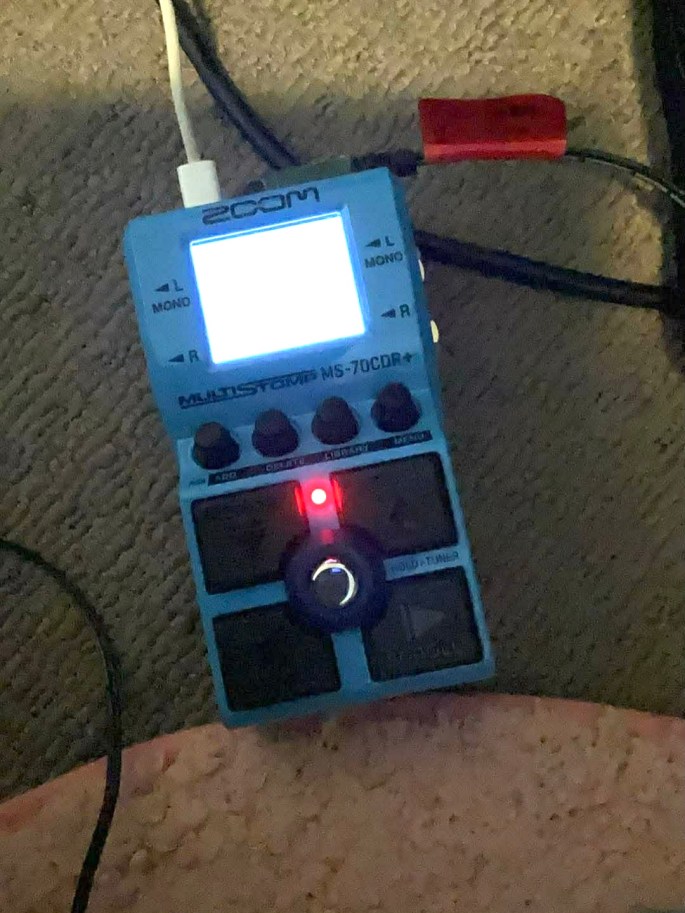
In February, just after the whirlwind of Shugorei’s Memories of Magic album launch party, I found myself diving into a new creative tool: the Zoom MS-70CDR multistomp pedal. This compact little box is packed with modulation, delay, and reverb effects—but what really caught my attention was its potential to create bit‑crusher textures on vibraphone for a new tune we were beginning to shape.
I quickly gave it a nickname: Doraemon. It’s blue, endlessly helpful, and surprisingly multitalented—always ready to produce exactly the right tool for the moment. The name felt fitting.
I had never used digital effects on a vibraphone, so for me it was a leap into unknown territory. But after chatting with some tech‑savvy friends at the launch, I discovered something interesting: you can load other Zoom effects into this unit, even ones not originally included. That completely changed how I saw the pedal—it suddenly felt far more expansive than its small footprint suggested (although, is footprint the right word? I use this pedal with my hands!).
I hadn’t tried customising it yet back then, but even knowing what was possible was thrilling. It felt like unlocking a hidden world of textures and sonic experiments. For a project like Shugorei—where magic, mystery, and innovation are always part of the journey—this seemed like the perfect next step.
This draft stayed quietly unfinished… until today.
Returning to it now (April 2026), the pedal itself has hit a snag. It’s still functioning sonically, but the screen no longer displays any visuals, making editing and navigation almost impossible. So today I took it back to the store to see how it goes from here.
It’s a reminder that creative tools have their own journeys—sometimes full of sparks and surprises, sometimes requiring patience, troubleshooting, and repair. Whether this particular pedal continues with us or not, the curiosity it sparked back in February is still very much alive.
And as we continue shaping the vibraphone’s voice into something otherworldly, I’ll share more as this soundscape evolves.
Shugorei is about an idea. The idea is that ordinary reality is linked to a shadow world. It’s a feeling we all have sometimes, at twilight, when we see a bluriness, or feel an energy buzzing in our fingertips. That dream feeling is as important to us as day-to-day life, and we elevate it, using music to bind our real world with the shadow world.
The City and Its Uncertain Walls is a novel by Haruki Murakami. A reviewer described Murakami’s book as, “an elegant fable that deftly weaves ordinary reality […] with a shadow world that is at once eerie and beautiful.” Because it is just as described, we found this novel resonated strongly with our work.
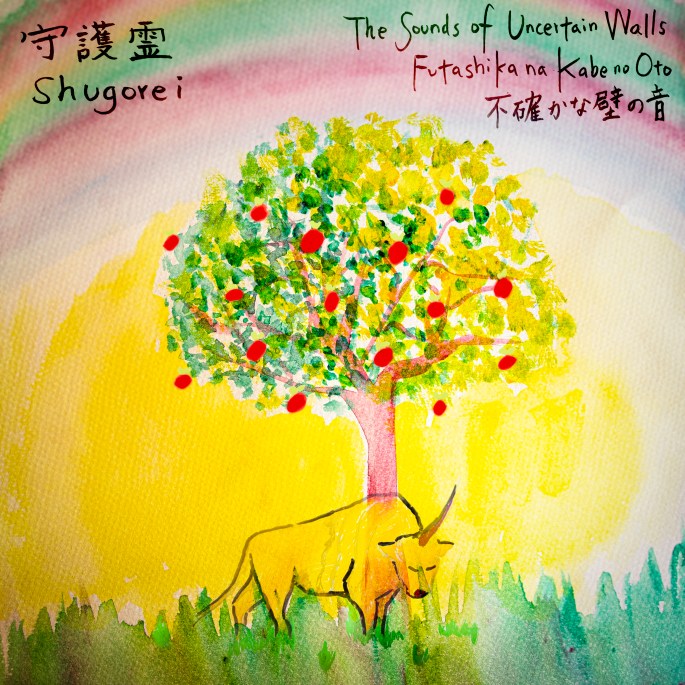
Others have called this variety of literature “urban magic.” Maybe our creations are its musical equivalent. We had recently begun a new set of improvising sessions in the studio, with the aim to make a new EP, when Nozomi mentioned The City and Its Uncertain Walls 街とその不確かな壁 to me. Soon after, I read the book myself (that is, the English translation by Philip Gabriel). I was stunned by how much this work felt to me like Shugorei’s music feels to me.
We immediately oriented our studio sessions with this story – to try to capture its feel in our music. The result is, we hope, a depiction of an urban magic: entirely dreamy and enchanted, yet tethered to the here and now.
We launch Sounds for Uncertain Walls | Futashika na Kabe no Oto | 不確かな壁の音 as a nice surprise for our listeners. It’s not as action-packed as much of our music, remaining gentle and atmospheric for its whole duration. It is a brief resting place for you. Be invited in, slow down, be under a spell.
Sounds for Uncertain Walls|Futashika na Kabe no Oto|不確かな壁の音 を、 私たちはリスナーの皆さまへのちょっとしたサプライズとして発表します。
This very same music is being used in an installation in the Ipswich Art Gallery, called LightPlay. We’re confident our magical feelings will filter through for kids and parents who visit that installation too.
この同じ音楽は、Ipswich Art Gallery のインスタレーション “LightPlay” でも使用されています。
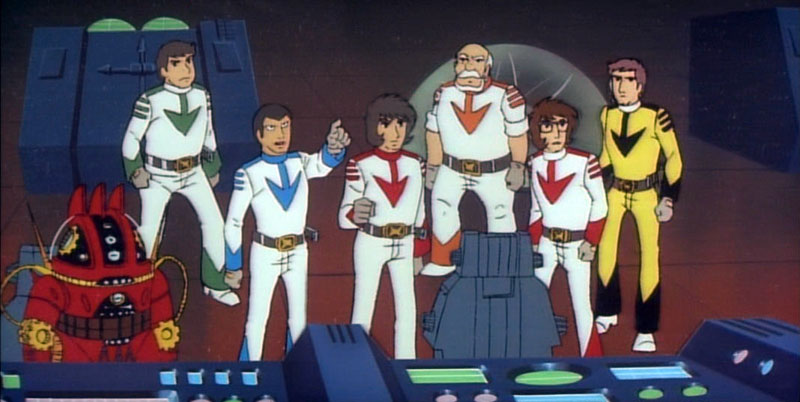
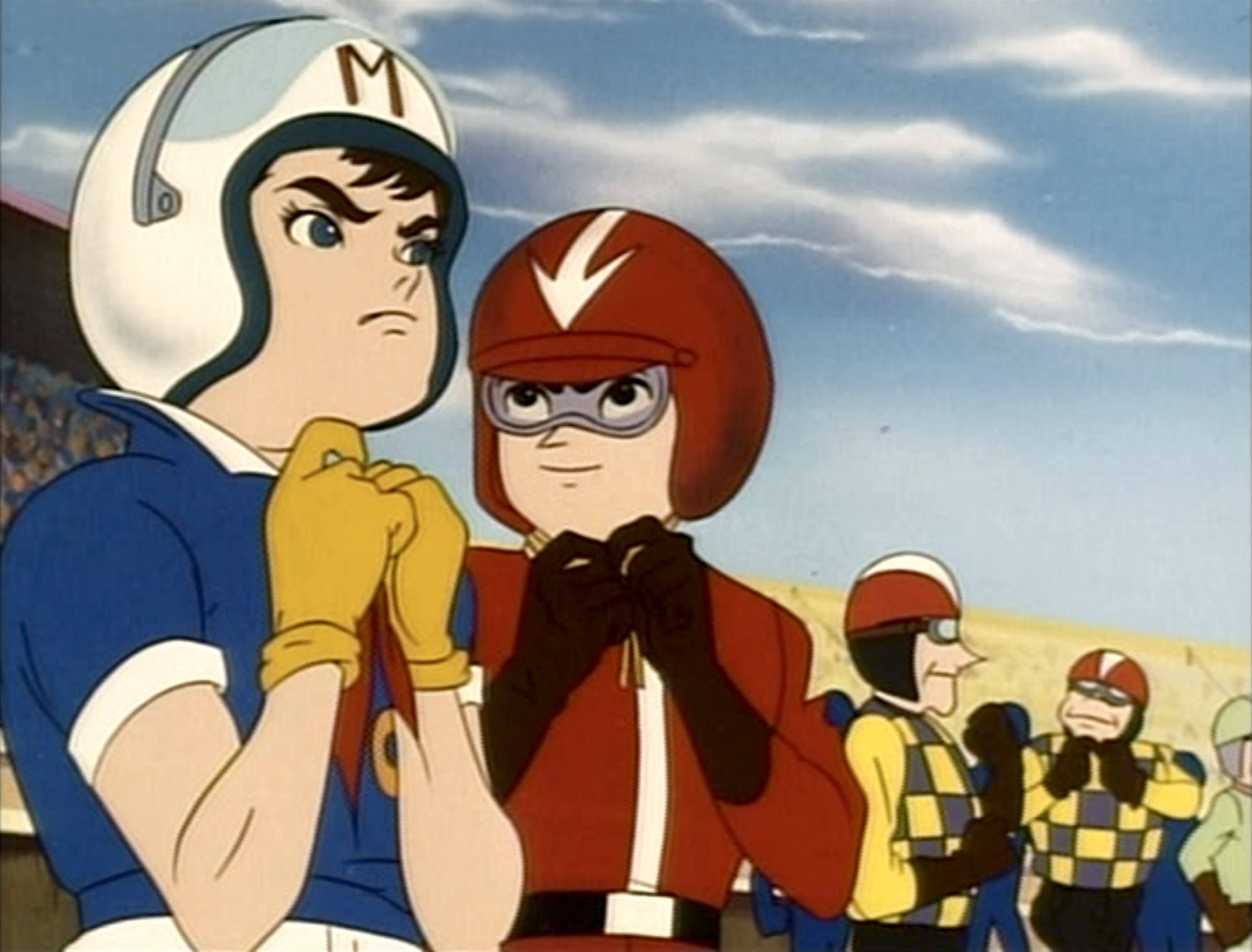
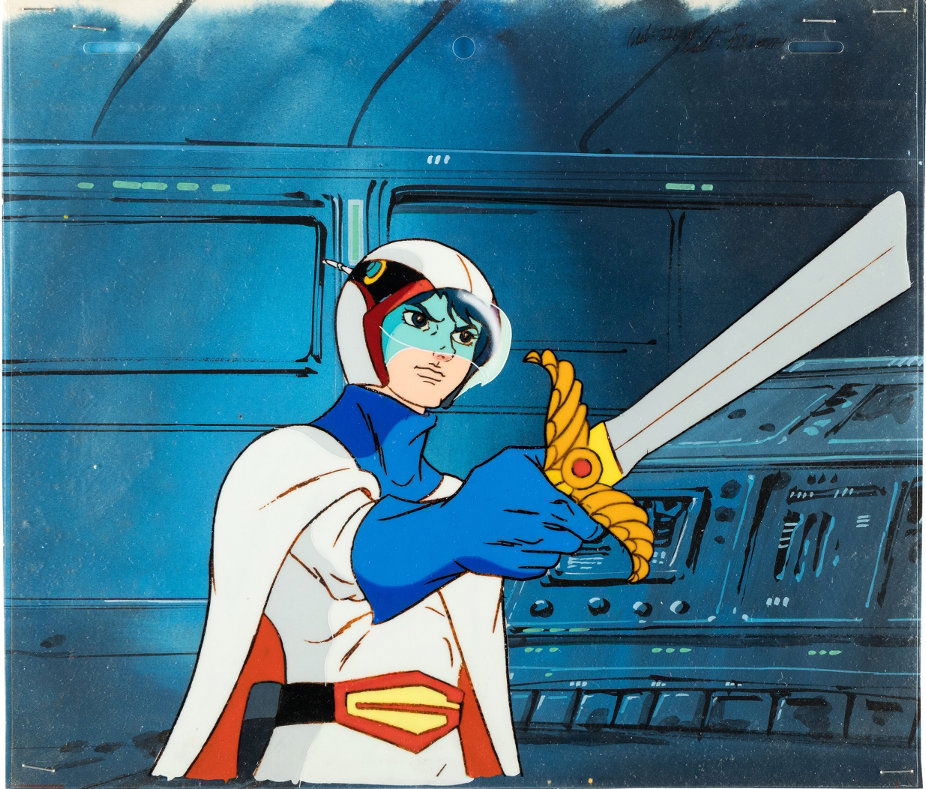
It’s hard to say exactly why we took this approach. It’s probably because, for Shugorei, music and storytelling is inextricably intertwined. I (Tom) was commissioned by Australian Youth Orchestra to write a new symphonic work for the 2026 Summer Music Festival; they asked for it to be about anime. Needless to say, I was won over by this concept right from the start.
That is understating it, actually. All Shugorei’s music is a manifestation of our finding fantasy and magic in everyday life, and in fact our music goes well past mere recordings or concert events. With Nozomi’s Japanese background and equal enthusiasm for anime, I decided to invest fully in the possibility of music inspired by anime. But it was not immediately clear how one might stem from the other.
We decided that if the anime were imaginary – an animated TV show that doesn’t exist – it could inspire a symphonic work equally as well as anything else.
I like to relate this to Tolkien, who showed fiction writers that the intricate building of a world which surrounds a central narrative serves to make that narrative all the more compelling and real. But in this case, rather than a narrative, there is a symphonic piece, and the world-building has served that central element. Writing syphonic music to fantasy themes is highly rewarding and not new, but I’m delighted to give it a shot with anime, and perhaps this prceise thing has never been done before.
Noz and I created a constellation of elements which we hope might each be explored in their own right, and each have helped underpin the meaning of the symphonic music. These include:
The imaginary TV show’s synopsis (I’m tantalised by the notion of a fiction within a fiction);
A (real) J-pop-style production of the show’s opening theme (currently not publicly released), including song lyrics which relate to the synopsis;
Both these elements are presented in English and Japanese;
The first several chapters of a novelisation (we will publish this gradually);
And, most impressively, concept artwork by the inspirational Ginko Kiyotani Eris.
It is that last element which we are delighted to feature here on this blog. Her carefully conceived and crafted illustrations will be featured one-by-one, and we hope you can enjoy some of the fine detail in these works.
That tradition is clearly observable in Ginko’s work, who would have been as enthrawled by the Japanese manga and anime of the 1970s and 1980s as many Australian kids of the time, like me.
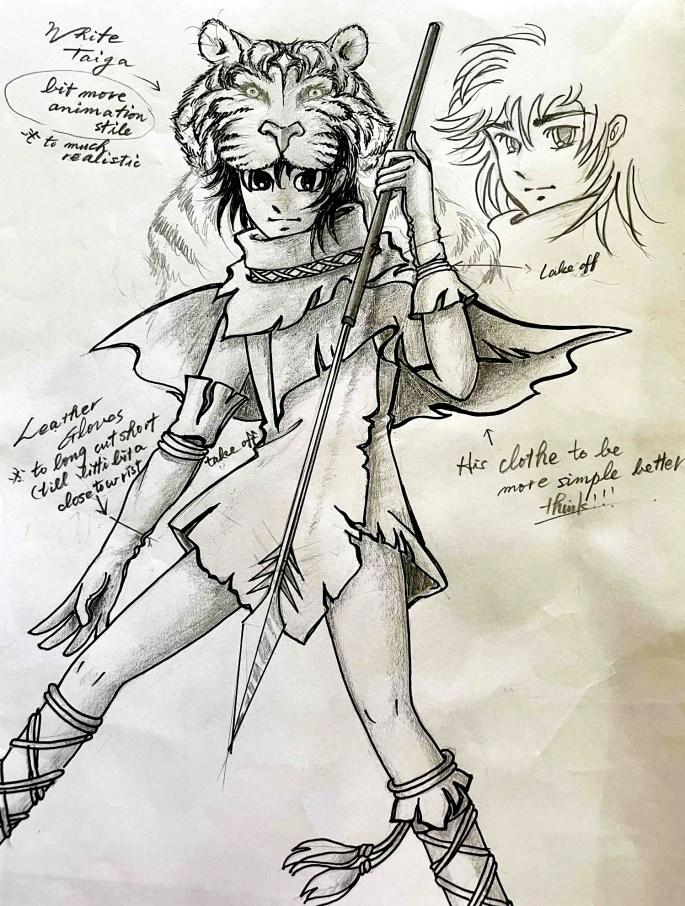
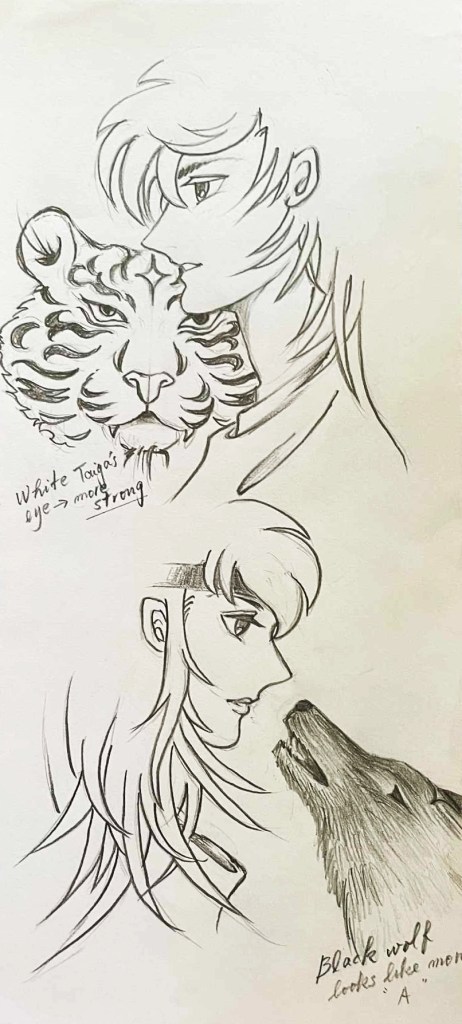
Ginko’s technique involves creating a series of sketches, so as well as demonstrating the final products, we can show you her process. Here is an early sketch for one of the concepts. This image is of one of the story’s two central characters: Raikō.
It’s amazing to see the progress of these images; you will notice that in the following image, the black wolf will improve significantly between this and the final version; Ginko herself seems to note this, indicating “learn more” on the sketch!
Memories of Stars Synopsis:
We created this overview in both Japanese and English (and it went on to serve as the foundation for the J-pop theme’s lyrics).
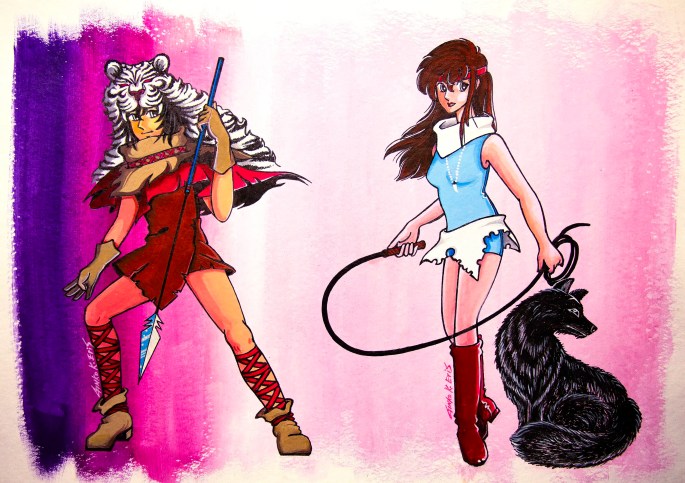
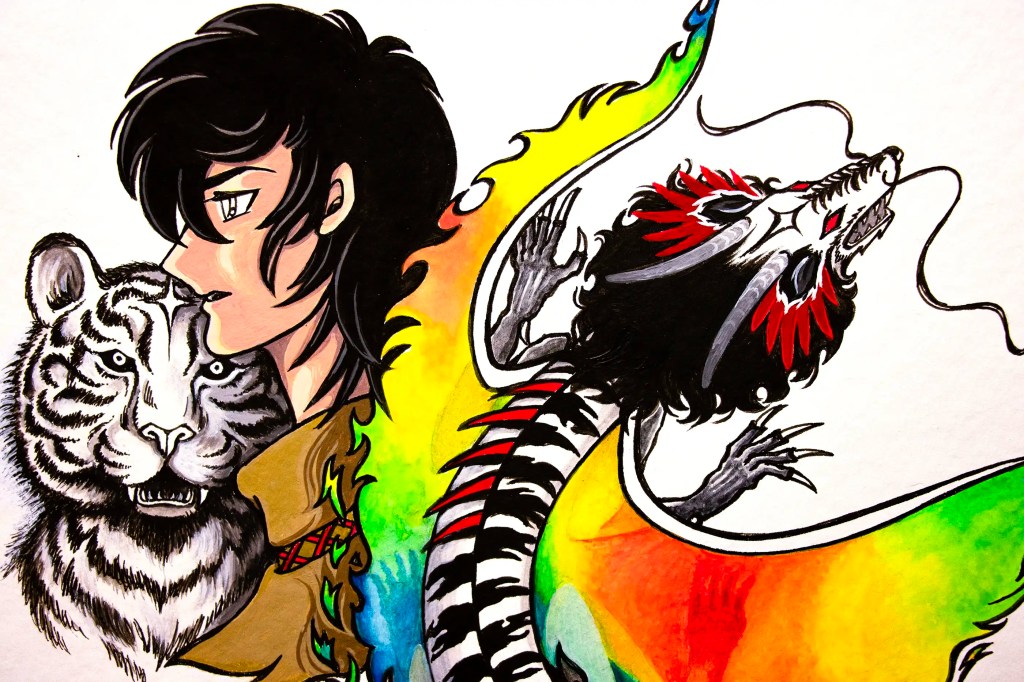
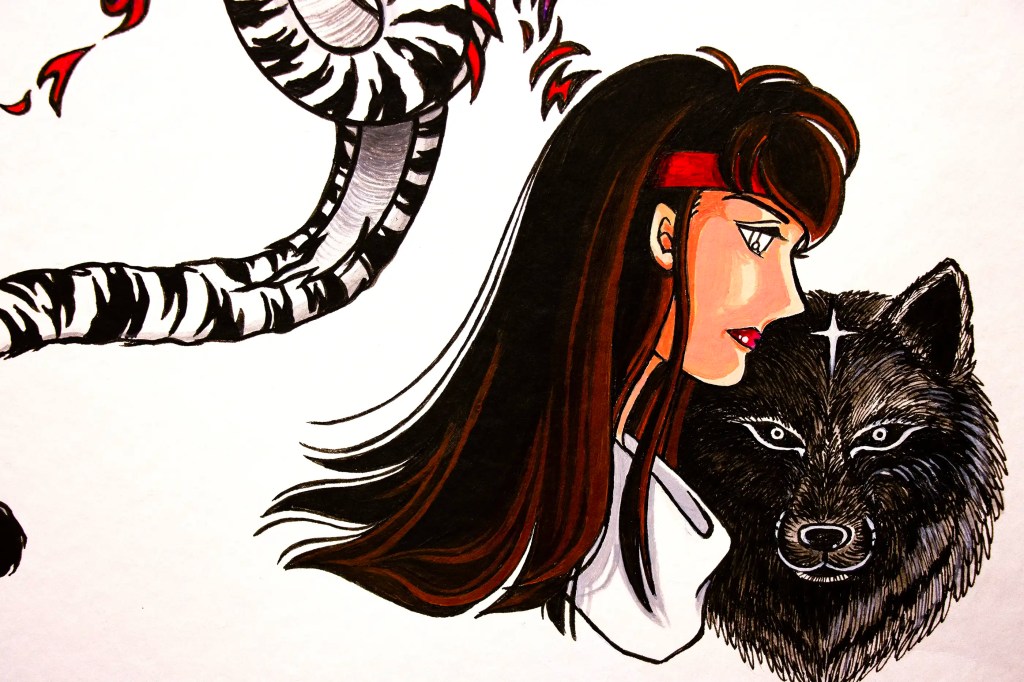
Since the dawn of time, two primordial forces have been reborn again and again, destined to circle each other through the ages. One is a boy blazing with incandescent energy, lightning dancing across his skin. The other is a girl cloaked in the velvet stillness of night, her power deep and quiet like the stars. Unaware of their shared past, they cross paths in their latest lives and instinctively give chase—racing through the vastness of space at breathtaking speed, each believing the other might be their enemy.
The boy can summon his true power by transforming into a magnificent lightning tiger, a creature of raw speed and brilliance. The girl, in turn, can become a graceful black wolf, a shadow moving effortlessly through darkness. When their energies finally collide, something extraordinary happens: rather than destroying each other, they merge into a single, awe-inspiring dragon, a fusion of tiger and wolf, light and darkness. Together in this combined form, they discover they can change the world—solving crises, protecting life, and unraveling mysteries that span centuries. Their adventures lead them not only across the stars, but deep into the hidden layers of their own history, as they uncover the truth of their intertwined destinies and the roles they are meant to play on Earth.
Ginko used the synopsis and the subsequent song lyrics as inspiration for her drafts:
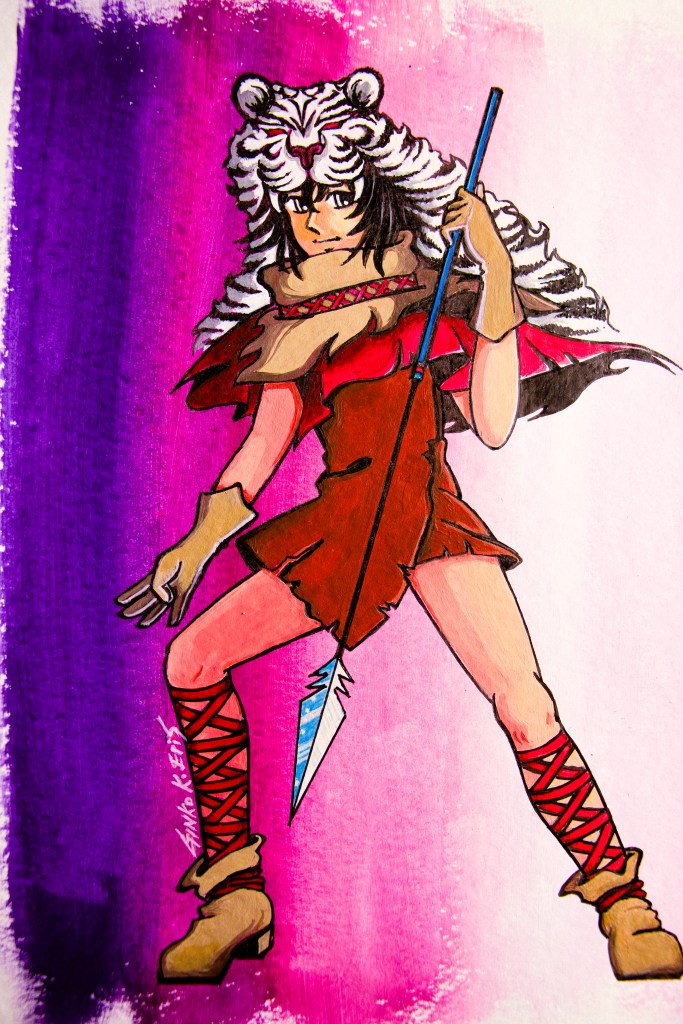
And so, it was our great pleasure to witness Ginko’s artwork resolve into fully detailed, fully coloured renditions of concept art for Memories of Stars (click on the images for enhanced detail).
As you enjoy the artwork, note the details. For example, the transparency of the dragon’s wings and its subtle allusion to the Yin and Yang, whose symbolism within our story Ginko easily picked up on.
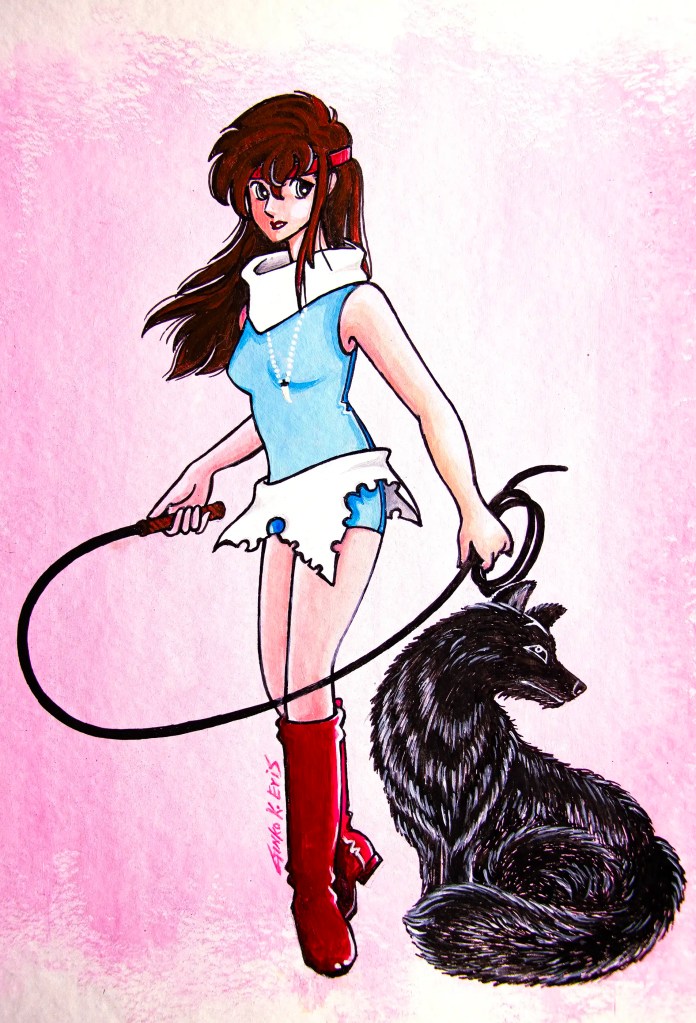
Ginko has been a fashion illustrator, and this comes through in her anime style. She alone decided what our characters should wear. Here are Kokurō and Raikō, outfitted by Ginko, based on the few cues she took from our writing.
You might ask, quite fairly, how does all this turn into a symphonic work? The answer is a personal one. I write music not merely to make pretty sounds. For me, music is a manifestation of what it means to be a human being. On occasion, this means breathing, motion and physiology (take, for instance, The Sounds of Chow Gar). In this case, it has been about story telling, which is another basic part of what it means to be a human. As me and Noz worked on creating the world, a story emerged (indeed, we will post about this story in future). The words for an “opening theme” (my “fiction within a fiction”) allowed me to compose that theme. Its melody I have taken and it has become the core of the symphonic work – as if I created a symphonic arrangement of a popular anime theme – yet that anime never existed. It’s slightly bittersweet: all of our endeavours in life are, in the end, perhaps, a fantasy. And yet, fantasy, imagination, story-telling and wonder give our lives deep and joyous meaning.
Sometimes the best stories come from spontaneous moments — and this one began with a simple question.
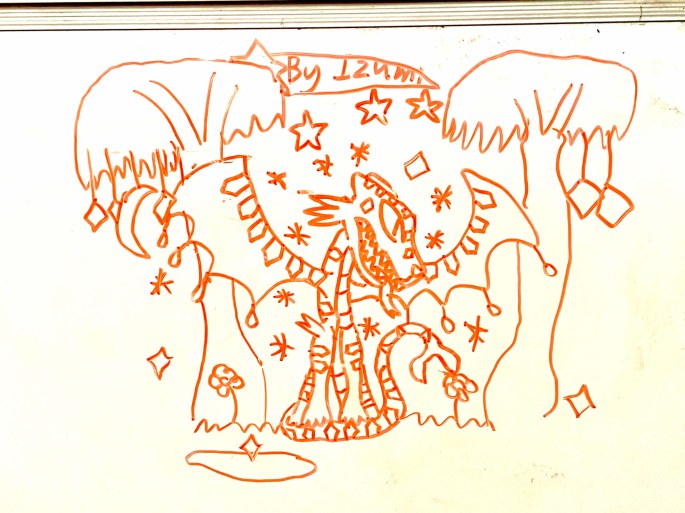
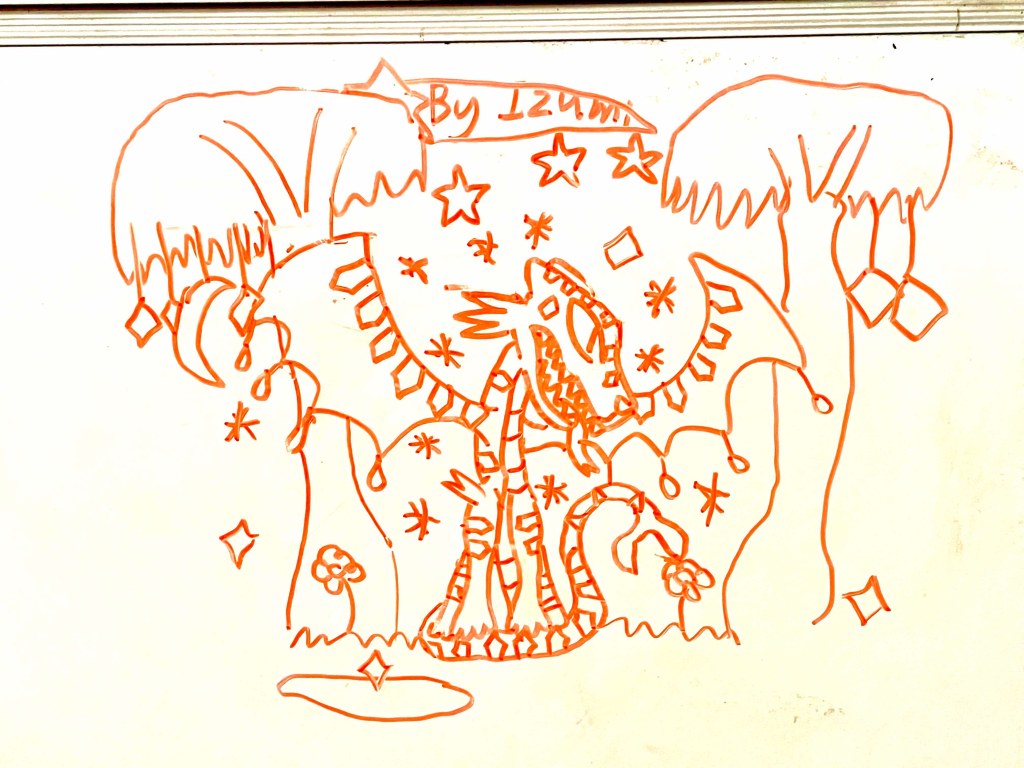
Tom, my creative partner in Shugorei, prompted me to ask my daughter — who has a natural gift for imagining mystical creatures — to come up with a short story about a magical being. Without hesitation, she began weaving a tale that instantly captured our imaginations.
She introduced us to Twilight, a majestic Cat Dragon who lives in the shimmering Diamond Forest. In this enchanted land, the diamond isn’t just a beautiful gem — it’s the lifeforce of Twilight’s family and community. But peace is shattered when an alien invader steals the precious diamond, threatening the very essence of their world.
The alien leaves behind their spaceship, and Twilight, determined and brave, decides to use it to chase them across the stars. Thus begins an epic battle — not just for the diamond, but for the survival of her homeland.
After the story was made, I got a task: to create a short melody. I ended up singing it into a voice recorder during a very short lunch break. I didn’t sing well — it was rough and rushed — but Tom heard something special in it. He took what I thought was a mistake and turned it into a cool key change. Lucky!
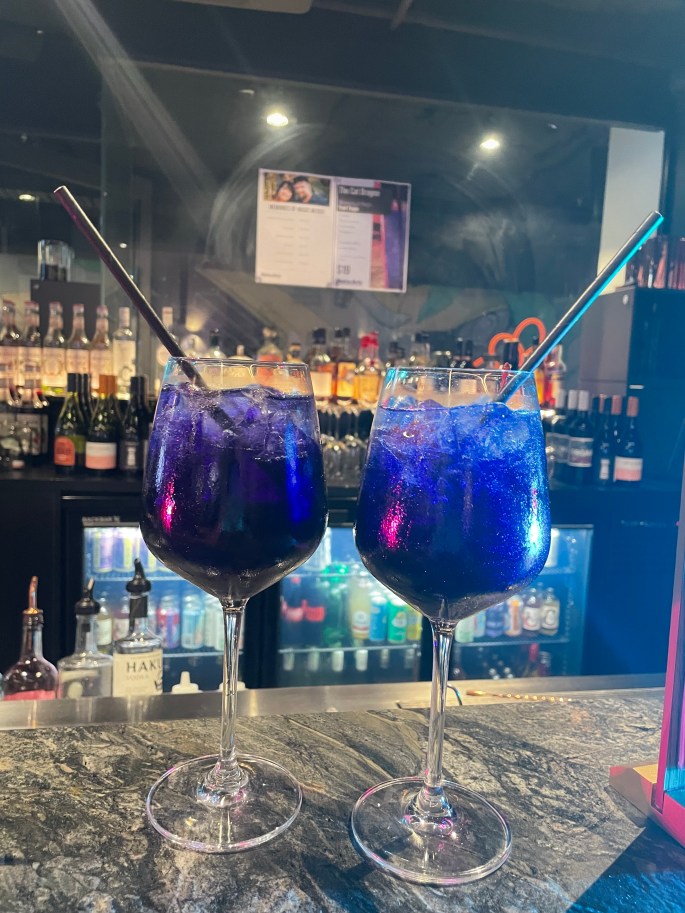
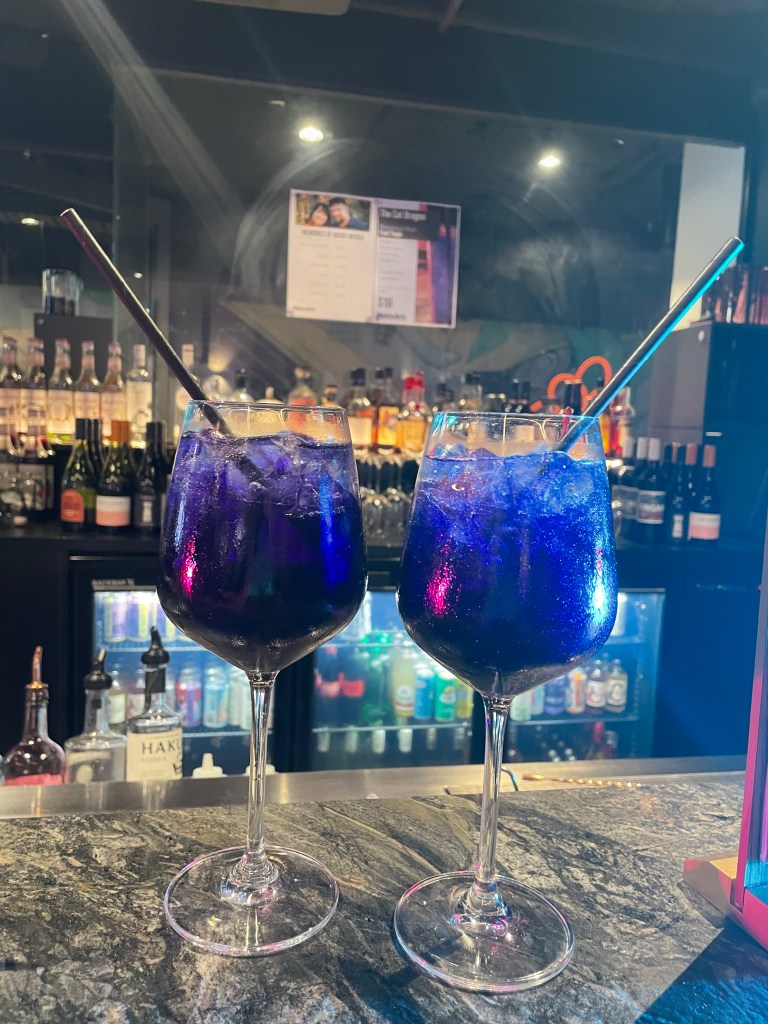
And then came the launch party. Metro Arts helped us celebrate in style by creating a special cocktail named after our magical creature: “Cat Dragon.” It was shiny, sparkly, and delicious — a perfect tribute to Twilight and the mystical world she came from. Thank you, Metro Arts, for adding that extra shimmer to the night.
This story, born from a moment of shared creativity, became the inspiration for a new Shugorei song. It’s a tale of courage, magic, and the power of imagination — and it reminds me how storytelling can connect generations and spark new artistic journeys.
Actually, the title of another track, Twilight refraction, was originally chosen to mean “sunset” or “dusk.” It was only later that I realized—by a curious coincidence—that it shares the same name as the Cat Dragon, Twilight.
Indeed, there is a a secret hidden just under the surface of Memories of Magic—魔法の記憶—Mahō no Kioku: all its tracks are bonded, in a kind of shared universe. Forest Between Worlds is the magical place that Twilight lives. Alchemy is the kind of magic that happens. But this story is something we discovered, rather than planned, so we can’t tell you all its elements, and you need to discover them for yourself. Perhaps Three Pathways is the magical way in which people from our world can travel to the Diamond Forest. The album is the world we would love you to explore.
Both of my kids’ voices actually made it into the track! A few days before the album launch party, my son told me, “I said ‘squished banana,’ but I can’t hear the banana bits—only me saying ‘squished.’” You can hear it towards the end of Cat Dragon. When we found it, it was pretty funny. My daughter’s voice is in there too—so it really feels like a little family moment hidden in the music. Thanks Tom.
Written by Noz
Cat Dragon soon after the story was made
ダイヤモンドの森には猫ドラゴンが住んでいます
Daiyamondo no mori ni wa neko doragon ga sundeimasu
I (Noz) wrote this piece, “Michi,” as a way of giving thanks — to Shugorei, to the community that surrounds it, and to all the collaborators, supporters, and listeners who have walked this path with us.
In Japanese, michi means journey. This piece traces the road that has brought us to this moment, while also gazing forward — toward the journeys that are still unfolding, unseen but full of promise.
The second verse carries a more personal meaning. It reflects my feeling of being an outsider — a traveller from another place, always searching for where I truly belong. In that sense, it echoes the ancient Japanese tale of Kaguya-hime, a celestial being who visits this world but never fully belongs to it. Through Michi, I wanted to capture that bittersweet sense of longing and wonder — the feeling of walking between worlds.
長い道を歩いてきた Nagai michi wo aruite kita I’ve walked a long road
あなたとこの時代に会えた Anata to kono jidai ni aeta I met you in this era
いやなこともつらいこともたくさんある Iyana koto mo tsurai koto mo takusan aru There are many unpleasant and painful things
たくさん泣いた Takusan naita I cried a lot
でも今は笑顔でいられる Demo ima wa egao de irareru But now I can smile
見つけたメロディー Mitsuketa melody The melody I found
何度も助けられた Nando mo tasukerareta Saved me many times
今日もいい日が過ごせます Kyou mo ii hi ga sugosemasu I hope today will be a good day too
今を大事に生きていきたい Ima wo daiji ni ikite ikitai I want to cherish the present and live fully
これからも一緒に歌おう Korekara mo issho ni utaou Let’s keep singing together
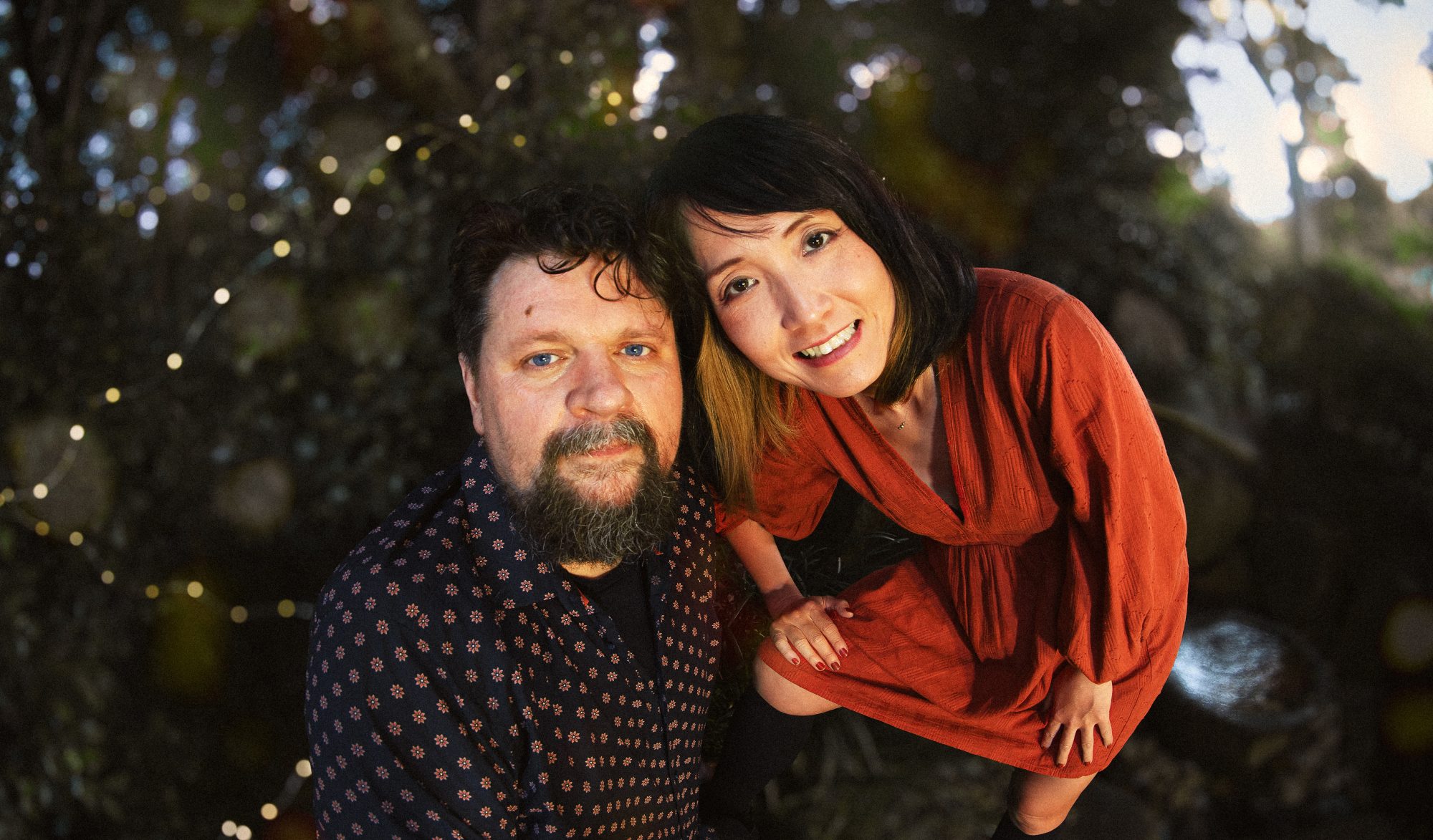
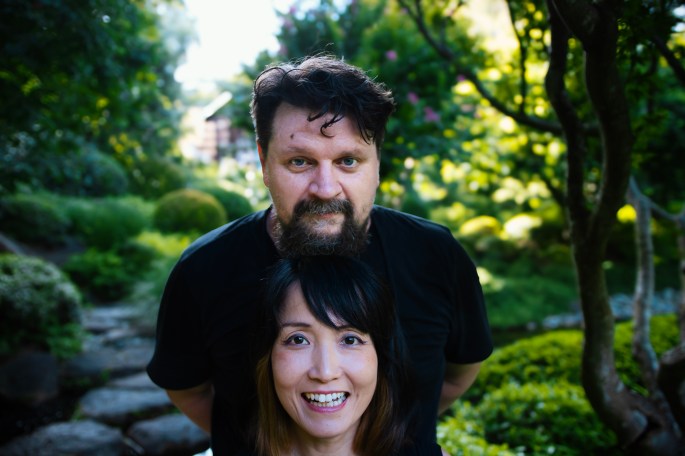
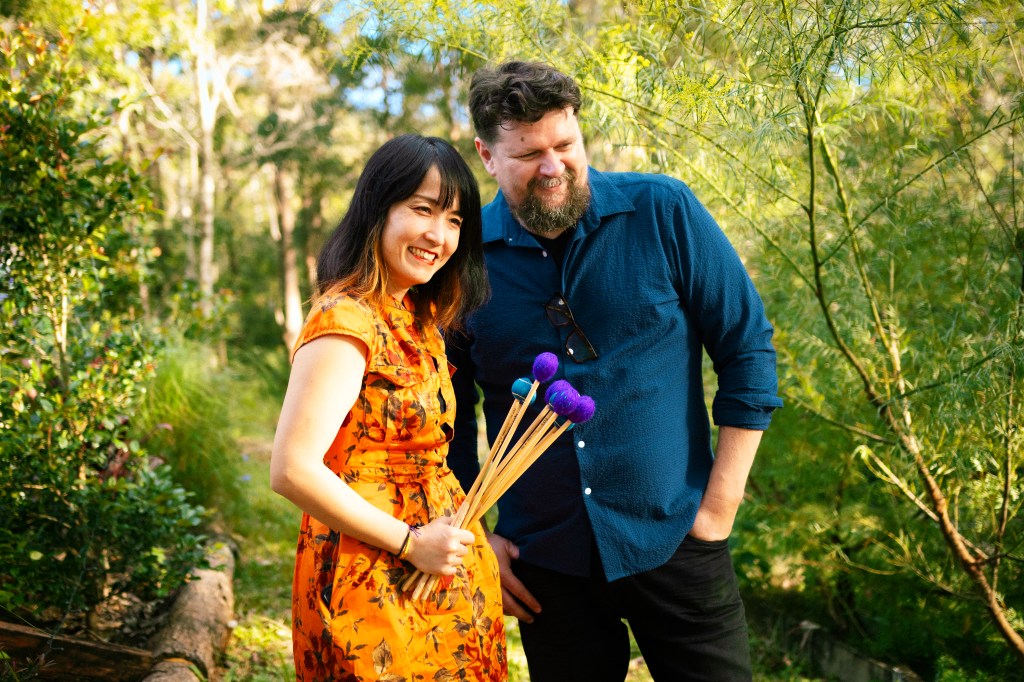
On a sparkling evening at Metro Arts, Shugorei (Thomas Green and Nozomi Omote) celebrated the launch of our new album, Memories of Magic, with a live performance that felt just as magical as the music itself.
We were honoured to share the stage with special guest vocalist ShêmAllen, who joined us for one unforgettable song. Tom brought his signature blend of electronics, mini kawaii toy piano, and melodica, while Noz explored new sonic textures on the electric vibraphone with a fresh effects pedal (called ‘Doraemon’ because it’s blue and futuristic), plus some drums and tiny sound objects. It was a moment of playful experimentation and heartfelt connection.
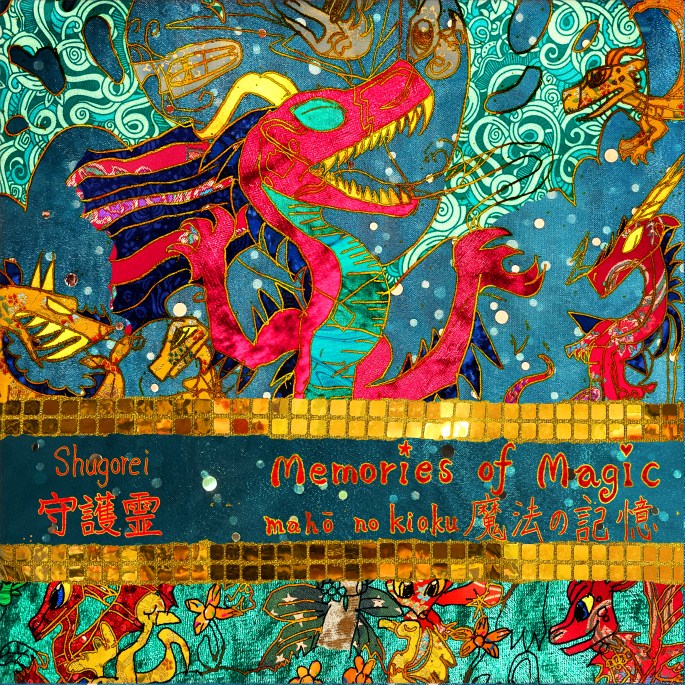
One of the highlights of the night was having Izumi Harmsen, the talented 10-year-old artist behind our album cover and merchandise, join us in person. Izumi’s whimsical drawings, coloured by Tom, have always brought a unique magic to Shugorei’s visual world. We were thrilled to celebrate her contribution together.
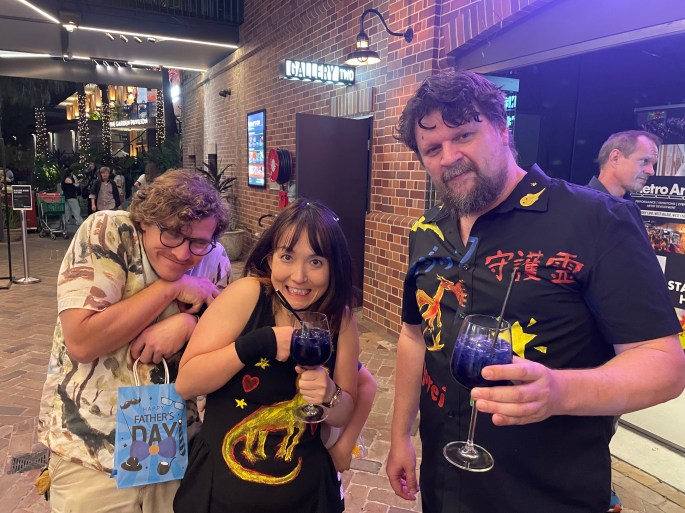
Metro Arts added their own touch of enchantment with a custom cocktail for the night: the Cat Dragon – a purple, sparkly drink that looked and tasted like something out of a dream.
We were also deeply grateful to Charlie Green, who created stunning visuals for the event. His dedication and long hours of preparation helped bring the atmosphere to life in ways we’ll never forget.
During break time and after the performance, Tom and I had a wonderful time mingling with audience members, sharing stories and laughter. The support from the Metro Arts team was incredible, and we feel lucky to have launched Memories of Magic in such a warm and welcoming space.
Looking ahead, Shugorei will be performing at Queensland Conservatorium on Wednesday, 12th November, and we’re already dreaming up our next release – a new EP planned for February 2026.
Thank you to everyone who joined us and helped make this night so special. The magic continues…
We’ve mentioned this before, but I’ll say again because it’s so important for us: Shugorei is all about magic. Music, in a way, is a sort of magic. Think about it. We make some sounds, and it makes us feel a certain way, sometimes powerfully. It can make you cry, or it can be part of the day where your life changed forever. What’s more, it’s quite easy. I cry at music all the time. Don’t you? If not, maybe it’s time you let music do that special sort of magic. Try it out! It’s a gentle magic; it needs your willingness to work.
Years ago, it was really nice for me (Tom) to discover that Nozomi is an advocate of magic in music. Before that, it had been a secret I had kept mostly to myself, but Noz is very open about such things, and told me that she too understands that music, when it evokes a mood, or a memory, or a flavour or a smell, is doing something quite like casting a spell. For Shugorei, music is more than a sound, or a thing. It’s something that happens in us; it’s something that we are.
The Charm is about Shugorei’s magic. We’re weaving enchantments, and this is a love song for you and everyone. All of us make choices. Choose to be lovestruck.
Our good friends, Shêm Allen (voice); Karin Schaupp (classical guitar); Camille Barry (violin); and Dan Curro (cello) have helped us to conjure up this tapestry, and we’ll always be grateful to each of them.
The Charm: Cast a spell Like a sphere of light and heat So you, and everyone, can tell The world is new when our eyes meet I’m going to cast a spell A sphere of warmth will grow in you The sun in our mouths will dwell And all the myths were true
いつか Itsuka あなたが触れた Anata ga fureta 光る丸いもの Hikaru marui mono 輝く新しい Kagayaku atarashii 世界見える Sekai mieru 目が合えばいつか Me ga aeba itsuka 感じる不思議 Kanjiru fushigi 全て真実 Subete shinjitsu
Cast a spell The world is lost in motion Crystalise it With a love potion All hearts fail in time But the magic is eternal Like a forest in a fable
Our new single, ‘Three Pathways’, offers an electrifying glimpse into our forthcoming 2025 album,Memories of Magic—魔法の記憶—Mahō no Kioku.
Blending the ethereal with the experimental, this album promises to be a vibrant tapestry of sound, weaving themes of magic, animism, dreams, and fantasy into lush, immersive worlds.
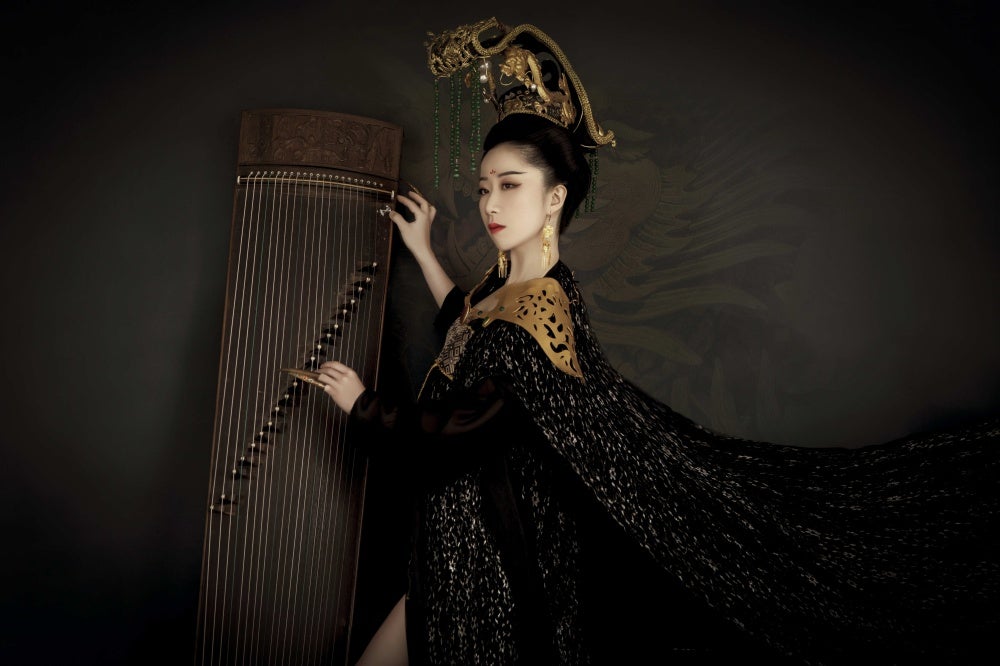
One of the album’s most intensely magical moments is ‘Three Pathways’, an incomparable collaboration with Mindy Meng Wang – master of the guzheng – creating a truly dynamic ensemble, capable of crystalline, exquisite subtleties and tremendous, cinematic emotional power.
Let’s talk about how a work like this comes into being.
This wonderful lady, Mindy Meng Wang, noticed our Instagram page. We think there is a kind of magic that brings people together. It’s invisible and magnetic. And in our first few messages, we’d decided to work on a project together. Mindy is well-known here in Australia and around the world, having performed with Gorillaz, Regurgitator, Tim Shiel, Paul Grabowsky, Deborah Cheetham, AAO, Orchestra Victoria, SSO and many others.
Mindy is a master of the guzheng, which is a Chinese harp. It has a depth and soul which can’t be put into words. Tom (from Shugorei) made a trip to Mindy’s house. It was a balmy Narm|Melbourne spring day. We settled down in a quiet, peaceful room in her house, with just the right kind of springtime light streaming through the window. Mindy’s young daughter, Phoenix, wanted to be closely involved in the recording (Mindy had been touring in the UK and was freshly returned). For Tom completing this recording, it was a gorgeous, exquisite, uplifting experience:
It was around this time that Nozomi (Shugorei) traveled to Kanazawa, her hometown in Japan. This is when we knew what the music should be about: Three individuals, from three different places, coming together to create something special. A work of music and visual art which, without words, shows how art thrives when people of different experiences, backgrounds and traditions come together.
(Tom speaks about the development of Three Pathways)
While Tom was working on the composition, Noz was completing videography around her hometown. Japan’s winter is ice-cold, and Noz captured these expansive, chilling scenes, featuring elements; snow, ice, water, frost, and human warmth, with a Japanese sensibility for landscape and architecture. Noz’s videography speaks without sound. It is deep, moving and vibrant. Noz also had children with her, and like Phoenix, they too were spiritually assisting: her daughter and son, Izumi and Takashi. Both of these little people are contributing artwork for Mahō no Kioku:
Artwork in development for Memories of Magic, by Izumi Omote-Harmsen, coloured by Thomas Green.
Nozomi arrived back in Brisbane, and in January 2025 – in Meanjin’s ferocious summer heat – it was time to complete the recording. Our summer must be unique in the world, and is felt in a way that speaks uniquely of this place. The music combines percussive and electronic sounds, and crucially, a dramatically ascending, boldly reaching, fervently yearning cello arc of iridescence, like Prometheus rendered as melody, expertly performed by Brisbane cellist Dan Curro. At this point in the music, the mild tenderness of the guzheng is transfigured with thunderous electronic bass and vast col legno: an invitation to the listener to release, and breath.
This music shows what we mean by magic, through memory; through vivid experience made sonic. Colours scintilate across visual and audible spectrums, with imminent, inescapable synesthetics.
But at its core, this piece is about traveling. Its players have traveled throughout their lives, boldly taking homes in new countries, with families and friends across continents. Without such risk and adventure, music like this cannot come into being. We have followed our pathways which have become entwined, and the integration of these stories is a tapestry forming a single and unique fabric; stories that we can tell without a word, in a way that must be some kind of magic, and born of memories.





 Shugorei